
Attic insulation is the most cost-effective upgrade for reducing heating and cooling costs in a Vernon, NY home, because heat escapes upward and an under-insulated attic lets it leave the building year-round. Most homes in our area built before the 2000s have attic insulation well below the R-49 to R-60 range recommended for Central New York’s climate zone.
We’re Highbridge Spray Foam, and we install spray foam, blown-in cellulose, and fiberglass attic insulation for homeowners and business owners throughout Vernon, Vernon Center, Oneida, and the surrounding communities. Our process starts with an assessment of your attic, followed by a clear recommendation based on what we find — not a one-size-fits-all quote.
Benefits Of Upgrading Attic Insulation

Most Vernon homes lose more heat through the attic than any other surface, which shows up as cold floors, uneven room temperatures, and higher utility bills. Adding insulation and sealing air leaks addresses both problems at the same time.
Improved Indoor Comfort
Heat moves upward in winter and downward in summer. When attic insulation is thin, compressed, or interrupted by gaps around recessed lights and top plates, that movement creates temperature swings between floors.
We commonly see second-floor bedrooms in Oneida County running 5 to 10 degrees warmer than the first floor in July, and noticeably colder in January.
A properly insulated and air-sealed attic slows that transfer. Rooms hold their temperature longer between heating cycles, drafts along ceilings and light fixtures drop off, and the furnace stops short-cycling to catch up.
There are secondary benefits as well:
- Fewer ice dams in winter, since less heat reaches the roof deck to melt snow unevenly
- Reduced dust and outdoor air infiltration through attic bypasses
- Quieter interiors, as dense insulation dampens sound from the roof and outside
Lower Heating And Cooling Costs
The U.S. Department of Energy estimates homeowners can save around 15% on heating and cooling costs by air sealing and adding attic insulation. In our climate zone, where heating season runs roughly seven months, most of that saving comes from reduced furnace or boiler runtime.
The size of the savings depends on where you start:
| Existing Attic R-Value | Typical Condition | Savings Potential |
|---|---|---|
| R-11 to R-19 | Original 1960s–80s batts | High |
| R-19 to R-30 | Partial upgrade, settled fill | Moderate |
| R-38 or higher | Recent work | Low |
Recommended attic levels in this region are R-49 to R-60 for vented attics.
Insulation also keeps working without maintenance. Blown-in fiberglass and cellulose typically perform for 30 to 50 years, and spray foam longer, so the savings continue well past the payback period.
Why Choose Us?
Choosing the right team for your attic insulation can make a huge difference in your home’s comfort, energy bills, and safety. At Highbridge Spray Foam, we make it simple, effective, and worry-free.
Customized
Solutions
Every attic is unique. We inspect your space and recommend the insulation solution that fits your home perfectly.
Experienced
& Professional Team
Our certified crew has years of experience installing attic insulation. We handle every project carefully, cleanly, and safely.
Energy Savings &
Comfort
Our attic insulation helps your home stay warmer in winter and cooler in summer. You’ll enjoy more even temperatures, fewer drafts, and lower energy bills.
Attic Insulation in Vernon, NY
Every home in Vernon, NY deserves year-round comfort and energy efficiency. Poor attic insulation can cause heat loss, drafts, uneven temperatures, and higher energy bills. Professional attic insulation helps create a more comfortable and efficient home.
How Attic Insulation Works
Attic insulation reduces heat transfer through your attic, helping keep your home warmer in winter and cooler in summer. It also helps minimize drafts, manage moisture, and improve overall indoor comfort.
Why Your Home Needs Attic Insulation
Quality attic insulation can reduce energy waste, improve temperature control, and help protect your home from moisture-related issues. With proper installation, it provides reliable performance and lasting comfort for years to come.

Professional Assessment And Installation
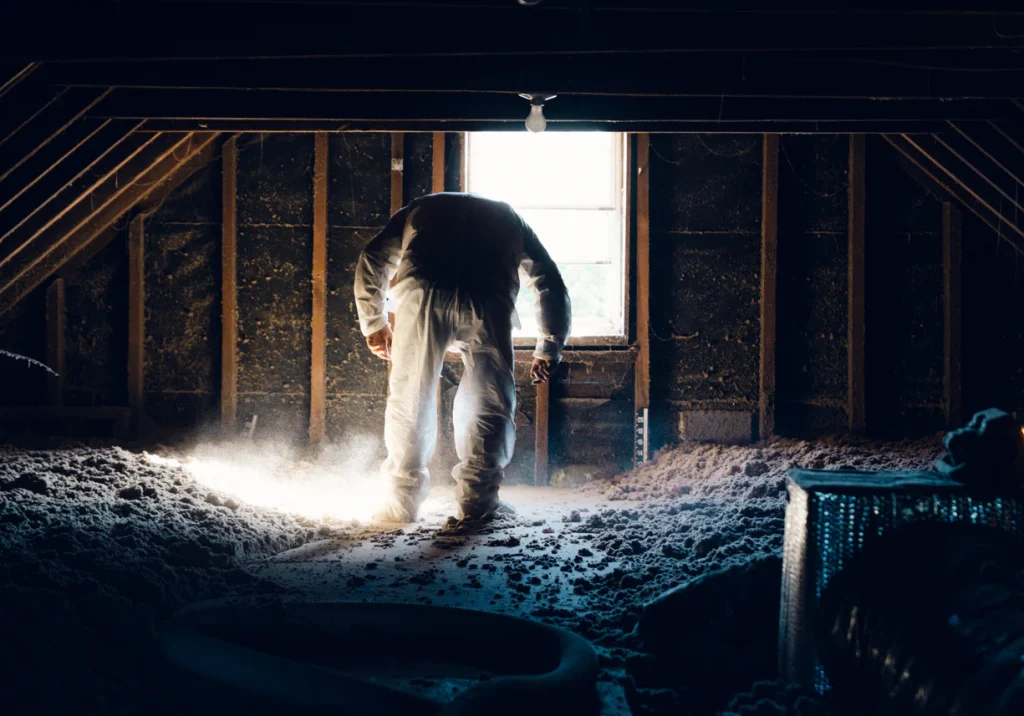
Every attic in Vernon behaves differently, so we start by measuring what’s actually happening in your home before recommending materials. That inspection determines where air is escaping, whether moisture is present, and which insulation type fits the space.
Identifying Air Leaks And Moisture Risks
We walk the attic and check the areas that typically leak conditioned air: top plates, recessed light housings, plumbing and wiring penetrations, chimney chases, and the attic hatch.
Bathroom and kitchen fans that terminate in the attic instead of outdoors are another common issue we look for, since they push humid air directly into the insulation.
Signs we document during the assessment include:
- Dark staining on existing insulation — an indicator of air movement through gaps
- Rusted nail tips or frost on sheathing — moisture condensing on cold surfaces
- Compressed or displaced batts — reduced R-value and open cavities
- Blocked soffit vents — insulation pushed into the eaves, cutting off intake airflow
We also record current insulation depth and type so you can see the actual R-value against what New York’s climate zone calls for.
Selecting The Right Insulation Solution
Once we know the conditions, we match the product to the assembly. Attic floors with adequate ventilation are often best served by blown-in cellulose or fiberglass, applied at consistent depth over an air-sealed deck.
For attics where mechanical equipment or ductwork is located above the ceiling, we may recommend closed-cell spray foam at the roofline to bring that space inside the thermal envelope.
| Condition | Typical Approach |
|---|---|
| Vented attic, ducts in living space | Air seal, then blown-in to target depth |
| Ducts or air handler in attic | Closed-cell foam at roof deck |
| Knee walls and sloped ceilings | Spray foam for continuous coverage |
| Existing insulation in good shape | Air seal and add depth over the top |
We explain the reasoning, the expected R-value, and what the work involves before anything is installed.
We Proudly Serve Vernon
Upgrade Your Attic in Vernon, NY for Comfort & Savings!
Improve year-round comfort and energy efficiency with Highbridge Spray Foam Attic Insulation. Stop wasting energy through your attic and start enjoying a warmer, quieter, more comfortable home.
Schedule your free inspection or request a quote today!
TESTIMONIALS
 Posted on Google

 Paul Hesler
Trustindex verifies that the original source of the review is Google.
Bret and his crew at Highbridge Spray Foam did an outstanding job! And they were incredibly dependable and courteous! Were great counsel when making suggestions! Would absolutely recommend them!!Posted on Google Barbara SoperCannot say enough about this wonderful company! They quickly returned my call. Arrived at the worksite within 48 hours of my initial contact! Gave us an estimate with 3 options clearly outlined what they would suggest. Made contact with town building codes quickly and professionally. Codes required higher R value on rooftop. Scheduled installation and they arrived as promised! Project was handled from the beginning to the end with complete professionalism! High recommend!!Posted on Google
 Judith WenhamThey do the best work with the best product!!!!Posted on Google
 Samuel MohranI can’t thank Brett and his team enough for the great job they did insulating the basement on my new construction home! This small business is very professional, courteous, and their attention to detail is at the top of their trade. And not only is his work excellent, the cost is better than any other company! There has been an immediate improvement in temperature and humidity, not only in the basement, but throughout the whole house as well! I can’t express my satisfaction enough with Brett and any future project I have, Highbridge will be the first call I make.Posted on Google
 Lisa EusticeExcellent crew and service! I am very pleased with their work and will be calling them again for my next project.Posted on Google
 Bruce BereanBrett from Highbridge came and gave me a quote to foam my breezeway floor. It is a narrow space between the floor and the ground. We agreed on a time to complete the work. He and his partner were right on time and got right to work. Brett crawled under the floor and removed all of the old insulation and began foaming the area we agreed on. He never complained that it was too tight to work in or that it was dirty. I would absolutely recommend Brett and Highbridge Spray Foam to do all of your insulation needs.Posted on Google
 Cheyenne FelkerI had spray foam applied in a new addition today. I can already tell the difference in temperature and even sound in that area. Super happy with the communication, turnaround time, speed of application, and clean up. Thanks Highbridge Spray Foam!Posted on Google
 todd babiczbrett and his crew are by far the best of the best! highbridge pays very close attention to every detail you mention and they deliver on it with precise workmanship. from the moment they arrive till the second they leave you feel like you are in good competent hands. i couldn’t be happier with the job they did. i will never go to anyone else. keep on keeping on highbridge! i will most definitely be a repeat customer!Verified by TrustindexTrustindex verified that these reviews were published on Highbridge Spray Foam's Google Business Profile. Learn more
FREQUENTLY ASKED QUESTIONS
Attic insulation decisions in Oneida County come down to code requirements, existing conditions, material performance, and cost. Below are the questions we hear most often from homeowners and building owners in Vernon and the surrounding area.
What attic insulation requirements apply to homes and commercial buildings in New York State?
Vernon falls in Climate Zone 6 under the New York State Energy Conservation Construction Code. For new residential construction, that means a minimum ceiling insulation value of R-49, with R-60 required in many attic assemblies under the more recent code cycles.
Commercial buildings follow the ASHRAE 90.1 or IECC commercial provisions, where required values depend on whether insulation sits above the deck, between joists, or in an attic space.
Retrofit work is treated differently. When you add insulation to an existing attic without altering the structure, you generally aren’t required to bring the whole assembly up to new-construction levels — though we usually recommend it, since the incremental cost of going from R-38 to R-49 is small.
Air sealing, ventilation, and ignition barrier requirements also apply. Spray foam in an attic typically needs a thermal or ignition barrier depending on whether the space is accessible or used for storage.
How do I know whether my attic needs additional insulation or air sealing?
A few signs are easy to check yourself:
- Visible joists. If you can see the tops of your ceiling joists, you likely have 6 inches or less of insulation — well below current recommendations.
- Ice dams in winter. Ridges of ice at the eaves indicate heat escaping into the attic and melting snow unevenly.
- Uneven room temperatures. Second-floor rooms that run noticeably warmer in summer or colder in winter often point to attic heat transfer.
- High heating bills relative to neighbors. Comparable homes with different bills usually differ in envelope performance.
- Drafts near ceiling fixtures. Recessed lights, bath fans, and attic hatches are common leakage points.
We also perform on-site assessments that measure existing insulation depth, check for compression or moisture damage, and identify penetrations that need sealing before any new material goes in.
What are the benefits of spray foam insulation for an attic?
Closed-cell spray foam provides roughly R-6 to R-7 per inch, which is higher than fiberglass batts or blown cellulose. That matters in attics with limited depth, such as cathedral ceilings or knee-wall assemblies.
The larger advantage is that foam insulates and air seals in one application. It adheres to framing and sheathing, filling gaps that batts leave behind at rim joists, top plates, and around ductwork.
Closed-cell foam also acts as a vapor retarder at sufficient thickness and adds structural rigidity to the roof deck. Open-cell foam costs less per board foot and is often used in unvented attic assemblies where vapor permeability is desirable.
Both types resist settling, so the R-value you install is the R-value you keep.
What are the potential drawbacks or risks of spray foam insulation in an attic?
Cost is the main one. Spray foam runs higher per square foot than blown-in fiberglass or cellulose, though the air-sealing benefit often offsets that over time.
Installation quality matters more with foam than with other materials. Improper mixing ratios or application over damp substrates can cause poor adhesion, odor, or incomplete curing. This is why we use calibrated equipment and monitor substrate conditions during application.
Foam is also difficult to remove once cured. If you plan to run new wiring or make structural changes, doing that work before insulating saves considerable expense.
Occupants should vacate during application and for the manufacturer-specified reoccupancy period, typically 24 hours.
Converting a vented attic to an unvented, conditioned assembly changes how moisture moves through the roof. That decision needs to account for existing roof condition, ventilation, and any combustion appliances in the space.
Will spray foam attic insulation affect my homeowners insurance or future property sale?
Some insurers ask about insulation type during underwriting, particularly for older homes. Properly installed spray foam that meets code ignition barrier requirements does not typically create coverage issues, but we recommend notifying your carrier after any significant envelope work.
For resale, documented insulation upgrades are generally viewed favorably. Buyers and home inspectors in Central New York pay attention to heating costs, and a recent attic insulation project with receipts and R-value documentation supports that conversation.
Keep your invoice, product data sheets, and any energy audit reports. Appraisers and inspectors will ask.
How much does professional attic insulation installation typically cost in Vernon, NY?
Pricing depends on square footage, target R-value, attic accessibility, and whether existing material needs removal.
As general ranges for the Vernon area:
| Material | Typical installed cost per sq. ft. |
|---|---|
| Blown-in fiberglass or cellulose | $1.50 – $3.00 |
| Open-cell spray foam | $1.50 – $3.50 per inch |
| Closed-cell spray foam | $3.00 – $6.00 per inch |
| Old insulation removal | $1.00 – $2.00 |
A standard 1,200-square-foot attic upgraded to R-49 with blown-in material commonly falls between $2,000 and $3,600. Closed-cell foam applied to a roof deck for an unvented assembly costs more, often $5,000 and up depending on thickness.
New York State offers incentives through NYSERDA and utility programs that can reduce project cost for qualifying homes. We provide written estimates after an on-site assessment so the numbers reflect your actual attic rather than an average.