
Drafty rooms, uneven temperatures between floors, and heating bills that climb every winter usually point to one thing in Vernon homes: not enough insulation where it matters most.
Blown-in insulation solves these problems by filling attics, wall cavities, and hard-to-reach spaces with loose-fill material that conforms around wiring, pipes, and framing—areas where batt insulation typically leaves gaps. It installs quickly, works well in existing homes without major demolition, and starts reducing heat loss as soon as the job is finished.
At Highbridge Spray Foam, we install blown-in insulation for homeowners and property owners throughout Vernon and Central New York.
Blown-In Insulation Benefits And Applications

Blown-in insulation fills cavities that batts often leave partially covered, which translates to steadier indoor temperatures and lower heating loads through a Vernon winter. It works in attics and in existing wall assemblies, including homes where tearing out drywall isn’t practical.
Improved Thermal Performance
Loose-fill material is pneumatically blown into place, so it conforms around wiring, junction boxes, plumbing runs, and irregular framing. That coverage reduces the gaps and compression points that lower the effective R-value of hand-placed batts.
Typical performance figures we work with:
| Material | R-value per inch | Common attic depth for R-49 |
|---|---|---|
| Loose-fill fiberglass | R-2.2 to R-2.7 | roughly 18–22 inches |
| Loose-fill cellulose | R-3.2 to R-3.8 | roughly 13–16 inches |
The practical results homeowners notice are fewer drafts, less temperature difference between floors, and shorter furnace cycles. Cellulose also adds a measure of sound dampening between rooms.
We verify depth with rulers set in the attic so the installed R-value matches what was specified, not just what was ordered.
Attic And Wall Coverage
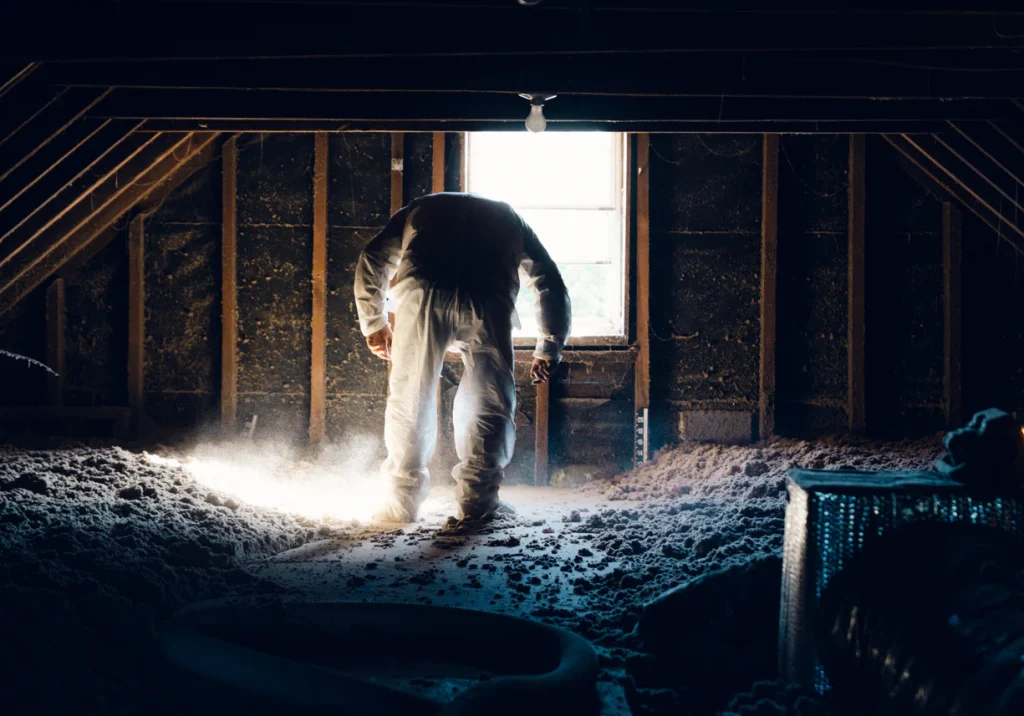
Attics are the most common application. Blown-in material spreads evenly across the attic floor, settles between joists, and reaches the eaves where heat loss is heaviest — areas that are difficult to insulate well by hand.
Before we blow, we air seal top plates, chases, and can lights, and install baffles at the soffits so ventilation stays open.
For walls, we use dense-pack installation through small access holes drilled in the sheathing or interior drywall. The cavity is filled to roughly 3.5 pounds per cubic foot, which resists settling and slows air movement inside the wall.
This approach suits older Vernon homes with balloon framing or empty stud bays, and it avoids removing finished surfaces. Holes are plugged and patched when the work is done.
Why Choose Us?
Hiring the right team for your blown-in insulation can make a big difference in your home’s comfort, energy efficiency, and protection. At Highbridge Spray Foam, we make the process simple, effective, and worry-free.
Customized Solutions for
Your Home
Every home is unique. We inspect your space and recommend the insulation solution that fits your attic or walls perfectly.
Experienced &
Professional Team
Our certified crew has years of experience installing blown-in insulation. We handle every project carefully, safely, and efficiently.
Energy Savings &
Comfort
Blown-in insulation keeps your home warmer in winter, cooler in summer, and reduces drafts. You’ll enjoy more even temperatures and lower energy bills.
Blown-In Insulation in Vernon, NY
Every home in Vernon, NY deserves reliable comfort and energy efficiency. Inadequate insulation can contribute to drafts, inconsistent temperatures, and increased heating and cooling costs. Blown-in insulation offers an effective solution for improving your home’s overall thermal performance.
Blown-In Insulation Explained
Blown-in insulation consists of loose fibers that are installed to fill gaps, cavities, and hard-to-reach areas. This helps reduce heat transfer, minimize air movement, and maintain more consistent indoor temperatures. It can also improve energy efficiency and help reduce outside noise.
Why Blown-In Insulation Matters

Properly installed blown-in insulation helps keep your home warmer during winter and cooler during summer. By reducing energy loss and improving temperature control, it can support lower heating and cooling demands while providing dependable, long-term comfort.
Professional Installation And Property Considerations
Properly installed blown-in insulation helps keep your home warmer during winter and cooler during summer. By reducing energy loss and improving temperature control, it can support lower heating and cooling demands while providing dependable, long-term comfort.
The material we blow into your walls or attic, the condition of the space before we start, and the R-value we install all affect how a Vernon home performs through a Central New York winter. Below we explain how we choose between cellulose and fiberglass, what happens during assessment and prep, and what the payback looks like.
Insulation Material Options
We install two primary blown-in materials, and the right choice depends on the cavity, existing conditions, and your goals.
| Material | R-Value Per Inch | Common Applications |
|---|---|---|
| Loose-fill fiberglass | R-2.2 to R-2.7 | Open attic floors, unfinished spaces |
| Loose-fill cellulose | R-3.2 to R-3.8 | Closed wall cavities, dense-pack retrofits |
Cellulose is made from recycled paper treated with borate for fire and pest resistance. Its higher density makes it effective at slowing air movement, which matters in older Vernon homes with drafty balloon-framed walls.
Fiberglass resists moisture absorption and settles less over time, making it a reliable choice for attic top-ups.
We also evaluate whether spray foam is a better fit for rim joists or knee walls, since a mixed approach often outperforms a single material.
Project Assessment And Preparation
Every project starts with a walkthrough. We check existing insulation depth, look for water staining, inspect knob-and-tube wiring, and identify air leaks around plumbing chases, recessed lights, and attic hatches.
Blowing insulation over unsealed gaps limits its effectiveness, so we air seal first with caulk, foam, or rigid blocking where needed.
Preparation steps typically include:
- Installing baffles at soffit vents to protect roof ventilation
- Building dams around chimneys, flues, and heat-producing fixtures
- Confirming bathroom and kitchen fans vent outside, not into the attic
- Drilling and plugging siding or interior walls for dense-pack retrofits
- Setting depth markers so coverage can be verified after the job
We cover work areas and clean up dust and debris before we leave.
Long-Term Energy Savings
Central New York heating seasons are long, and attics are where most conditioned air escapes. Bringing an under-insulated attic from roughly R-19 up to R-49 — the level recommended for our climate zone — meaningfully reduces heating and cooling load.
The U.S. Department of Energy estimates homeowners can save around 15% on heating and cooling costs through air sealing and attic insulation improvements. Actual results depend on your home’s age, HVAC system, and current insulation.
Beyond the utility bill, you’ll notice fewer cold floors above unconditioned spaces, less temperature swing between rooms, and reduced ice dam risk on the roof.
We can also discuss available New York State energy efficiency incentives that may apply to your project.
We Proudly Serve Vernon
Upgrade Your Home with Blown-In Insulation in Vernon!
Keep your home comfortable, energy-efficient, and draft-free with Highbridge Spray Foam. Schedule your free inspection or request a quote today!
TESTIMONIALS
 Posted on Google

 Paul Hesler
Trustindex verifies that the original source of the review is Google.
Bret and his crew at Highbridge Spray Foam did an outstanding job! And they were incredibly dependable and courteous! Were great counsel when making suggestions! Would absolutely recommend them!!Posted on Google Barbara SoperCannot say enough about this wonderful company! They quickly returned my call. Arrived at the worksite within 48 hours of my initial contact! Gave us an estimate with 3 options clearly outlined what they would suggest. Made contact with town building codes quickly and professionally. Codes required higher R value on rooftop. Scheduled installation and they arrived as promised! Project was handled from the beginning to the end with complete professionalism! High recommend!!Posted on Google
 Judith WenhamThey do the best work with the best product!!!!Posted on Google
 Samuel MohranI can’t thank Brett and his team enough for the great job they did insulating the basement on my new construction home! This small business is very professional, courteous, and their attention to detail is at the top of their trade. And not only is his work excellent, the cost is better than any other company! There has been an immediate improvement in temperature and humidity, not only in the basement, but throughout the whole house as well! I can’t express my satisfaction enough with Brett and any future project I have, Highbridge will be the first call I make.Posted on Google
 Lisa EusticeExcellent crew and service! I am very pleased with their work and will be calling them again for my next project.Posted on Google
 Bruce BereanBrett from Highbridge came and gave me a quote to foam my breezeway floor. It is a narrow space between the floor and the ground. We agreed on a time to complete the work. He and his partner were right on time and got right to work. Brett crawled under the floor and removed all of the old insulation and began foaming the area we agreed on. He never complained that it was too tight to work in or that it was dirty. I would absolutely recommend Brett and Highbridge Spray Foam to do all of your insulation needs.Posted on Google
 Cheyenne FelkerI had spray foam applied in a new addition today. I can already tell the difference in temperature and even sound in that area. Super happy with the communication, turnaround time, speed of application, and clean up. Thanks Highbridge Spray Foam!Posted on Google
 todd babiczbrett and his crew are by far the best of the best! highbridge pays very close attention to every detail you mention and they deliver on it with precise workmanship. from the moment they arrive till the second they leave you feel like you are in good competent hands. i couldn’t be happier with the job they did. i will never go to anyone else. keep on keeping on highbridge! i will most definitely be a repeat customer!Verified by TrustindexTrustindex verified that these reviews were published on Highbridge Spray Foam's Google Business Profile. Learn more
FREQUENTLY ASKED QUESTIONS
Blown-in insulation raises questions about material choices, installation locations, pricing, and long-term performance. Below are the answers we give most often to homeowners and building owners in Vernon and the surrounding Oneida County area.
What is blown-in insulation, and where can it be installed?
Blown-in insulation is loose-fill material — usually fiberglass or cellulose — that we install using a hose and blowing machine. The material fills cavities and settles around wiring, pipes, and framing members that batt insulation tends to leave uncovered.
We most commonly install it in attic floors, exterior wall cavities, crawl space ceilings, and floors above unconditioned garages.
For walls in a finished home, we drill small access holes, blow the material into each stud bay, then plug and patch the openings. Attics are simpler: we blow the material directly over the existing floor to the depth needed.
How much does blown-in insulation cost for a home or commercial building?
Cost depends on square footage, the R-value you want, material type, and how accessible the space is. Attic work is typically the least expensive per square foot because the area is open and easy to reach.
Retrofitting existing walls costs more, since it involves drilling, patching, and more labor per cavity.
Commercial buildings vary widely. A pole barn, a small office, or a multi-unit property each present different framing and access conditions, so we price those after a walkthrough.
We provide written estimates that break out material, labor, and any prep work such as air sealing or attic baffle installation. That way you can see exactly what’s included before deciding.
Is blown-in insulation a good choice for attics and existing walls?
For attics, it’s often the most practical option. Loose-fill flows into irregular spaces, covers joists evenly, and can be added on top of older insulation that’s still dry and in reasonable condition.
Existing walls are where blown-in insulation stands out most. Dense-packed cellulose or fiberglass can be installed without removing drywall or siding, which makes it a realistic upgrade for older Vernon homes with empty stud bays.
There are cases where we recommend something else. Rim joists, basement walls, and areas with moisture problems usually perform better with spray foam or rigid board, and we’ll tell you when that’s the case.
How long does blown-in insulation last?
Properly installed blown-in insulation generally lasts 20 to 30 years or more, and fiberglass loose-fill can remain effective longer than that in a dry attic.
The material itself doesn’t break down under normal conditions. What shortens its useful life is water — roof leaks, ice dam damage, or plumbing failures can mat down the fibers and reduce R-value permanently.
Cellulose settles somewhat during the first year, which is expected. We account for that by installing to a settled-depth target rather than an initial-depth measurement.
Can blown-in insulation improve energy efficiency and reduce utility bills?
Yes, particularly in homes that currently have thin or missing attic insulation. Heat moves toward cold, and in Central New York winters that means it moves straight up and out through an under-insulated attic.
The Department of Energy recommends R-49 to R-60 for attics in our climate zone. Many older homes in the area sit closer to R-19 or less.
Savings vary based on your starting point, heating system, and how the house is used. Homeowners who go from minimal attic insulation to code-level depth typically notice more stable indoor temperatures and less furnace cycling.
We also recommend air sealing before insulating. Loose-fill slows heat transfer but doesn’t stop air leakage, so sealing top plates, can lights, and chases first gives you better results from the same insulation.
What type of blown-in insulation is best for my property?
Fiberglass loose-fill is lightweight, non-combustible, and doesn’t absorb much moisture. It’s a common pick for attics where weight on the ceiling drywall is a consideration.
Cellulose is made from recycled paper treated with borate. It has a slightly higher R-value per inch, packs more densely, and does a better job dampening sound — which makes it useful for interior walls and wall retrofits.
The right choice depends on the assembly, the moisture conditions, and what’s already in place.
During our assessment we check attic ventilation, look for existing air leaks, inspect for signs of past water intrusion, and measure current insulation depth. Those findings drive the recommendation rather than a one-size-fits-all answer.