
Metal buildings heat up fast in July and lose warmth just as quickly in January. Steel conducts temperature, and without a proper thermal barrier, your pole barn, workshop, or commercial facility in Cortland will cost more to condition than it should.
Closed-cell spray foam is the most effective insulation for metal buildings because it adheres directly to the steel panels, seals air gaps, and acts as a vapor barrier that stops condensation from forming on the interior surface. That last point matters in Central New York, where temperature swings between the inside and outside of a metal structure regularly cause moisture to bead up and drip onto equipment, inventory, or stored vehicles.
We install spray foam insulation in metal buildings throughout Cortland County, from residential garages to agricultural structures and commercial warehouses.
Why Metal Buildings Need Proper Thermal Protection
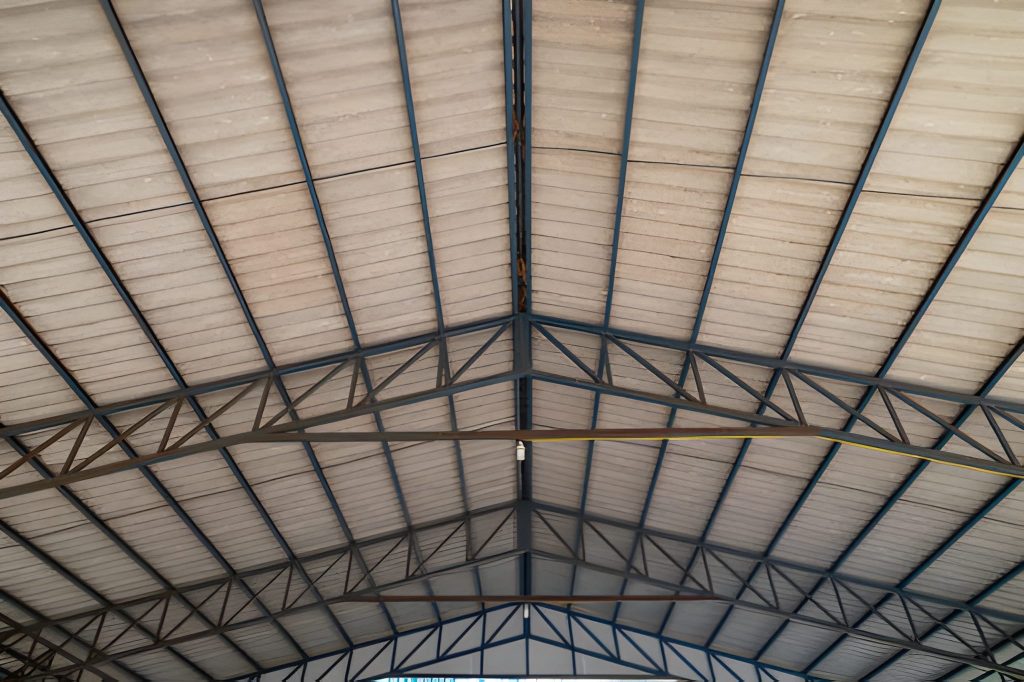
Steel conducts heat far faster than wood, which means an uninsulated metal building in Cortland gains and loses temperature quickly through its frame, panels, and fasteners. That same conductivity turns cold steel surfaces into condensation points whenever warm interior air reaches them.
Heat Transfer Through Steel Components
Steel has a thermal conductivity roughly 400 times higher than wood framing. Every purlin, girt, and structural column in your building acts as a direct path for heat to move between the interior and the outdoors.
This is thermal bridging, and it undercuts the performance of insulation placed only between framing members. Fiberglass batts compressed at each purlin can lose a significant portion of their rated R-value at those contact points.
In Central New York’s climate zone 6, an uninsulated metal envelope can lose 30 to 50 percent of heating and cooling energy. Closed-cell spray foam addresses this differently by adhering directly to the panel and encasing the steel members, creating a continuous layer with no gaps at fasteners or seams.
What this means in practice:
- Fewer temperature swings between January mornings and July afternoons
- Lower runtime on unit heaters and rooftop equipment
- Usable workshop, storage, or shop space year-round
Moisture Control And Condensation Prevention
Condensation forms when humid interior air contacts steel that sits below the dew point. In Cortland, that happens often — a 20°F night against a heated interior creates ideal conditions for water to bead on the underside of roof panels.
The result is dripping onto equipment, stored inventory, and insulation below. Over time, persistent moisture contributes to rust at panel laps, fastener holes, and structural connections.
Closed-cell spray foam addresses this in two ways:
| Mechanism | Effect |
|---|---|
| Air sealing | Blocks humid interior air from reaching cold panels |
| Vapor resistance | At 2 inches, closed-cell foam functions as a Class II vapor retarder |
| Direct adhesion | Eliminates the air gap where condensation would otherwise collect |
Because the foam bonds to the metal surface, there is no cavity for moist air to occupy. The steel stays warmer, and the dew point shifts into the foam layer rather than onto the panel itself.
Why Choose Us?
Choosing the right team for your metal building insulation can make a big difference in your comfort, energy bills, and peace of mind. At Highbridge Spray Foam, we make the process simple, effective, and stress-free.
Safe and Reliable Materials
We use durable and safe insulation built for metal buildings, keeping them protected from moisture, drafts, and temperature swings.
Experienced and Reliable Team
We handle every project with care, professionalism, and attention to detail. You can count on us to do it right.
Save on Energy Costs
Well-insulated metal buildings use less energy. That means lower bills and smarter spending.
Make Your Metal Building Comfortable Year-Round with Highbridge Spray Foam
Every metal building in Cortland, NY should be designed to provide reliable comfort, energy efficiency, and long-term protection. Without adequate insulation, metal structures can absorb and transfer heat quickly, resulting in excessive indoor temperatures during summer and significant heat loss during winter. These conditions can lead to uncomfortable spaces, increased heating and cooling demands, and higher energy costs. A professionally installed insulation system helps improve temperature control and overall building performance throughout the year.
Metal Building Insulation Explained
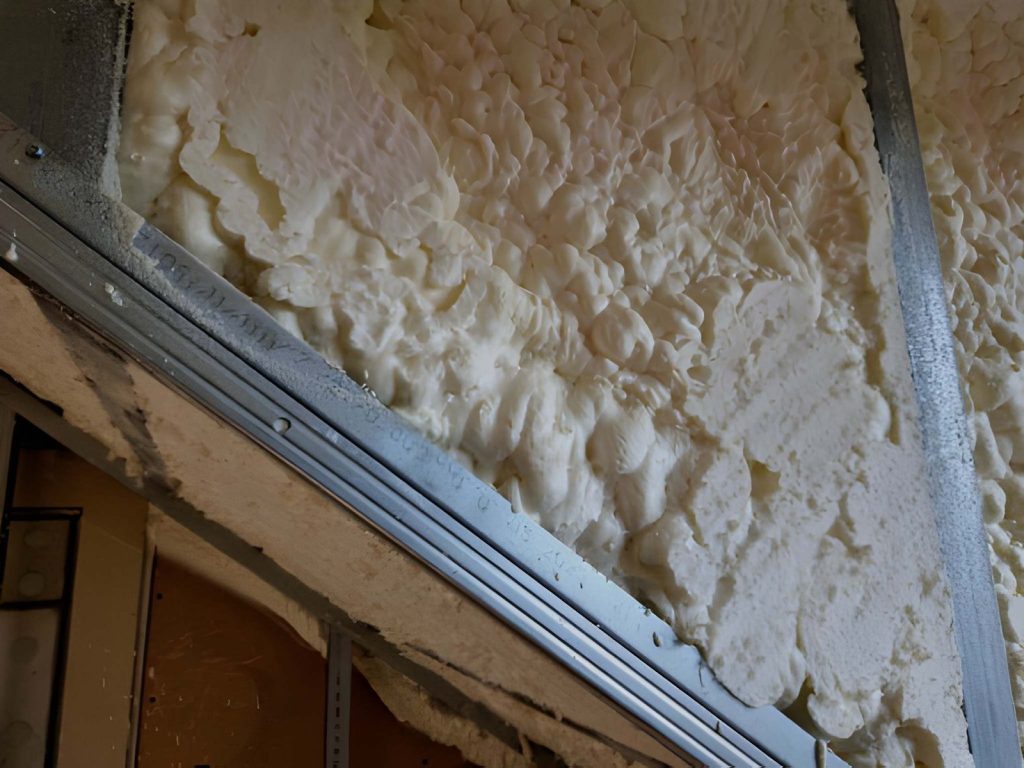
Metal building insulation is designed to reduce heat transfer through walls, ceilings, and other areas of the structure. It helps maintain more consistent indoor temperatures, minimize drafts, and improve energy efficiency. Proper insulation can also help manage condensation and moisture, reducing the risk of corrosion and other moisture-related issues that can affect metal components. With the appropriate materials and professional installation, metal building insulation can provide dependable performance, improved comfort, and lasting protection.
Insulation Options And Installation Considerations
Metal buildings in Cortland County face temperature swings, heavy snow loads, and constant condensation risk at the steel panel surface. The material you choose and how it’s applied determine whether you get real thermal control or just a temporary fix.
Spray Foam Performance For Metal Structures
Closed-cell spray foam adheres directly to the underside of metal panels, sealing the ribs, seams, and fastener penetrations that fiberglass blankets tend to leave open.
That adhesion matters in steel construction. Because the foam bonds to the panel, warm interior air never reaches the cold metal surface, which is where condensation and rust typically begin.
Typical performance figures for closed-cell foam:
| Property | Value |
|---|---|
| R-value per inch | Approximately R-6 to R-7 |
| Air barrier | Yes, at roughly 1.5 inches |
| Vapor retarder | Class II at 2 inches |
| Structural contribution | Adds rigidity to panels |
Open-cell foam costs less and still seals air, but it absorbs moisture and is generally better suited to interior walls than to exterior metal roof decks in our climate.
Planning For Building Use And Local Weather
How you use the building drives the specification. A heated workshop, a cold storage barn, and a finished office suite each call for different thickness and placement.
We look at a few factors before quoting:
- Heating and cooling equipment already installed or planned
- Ventilation needs for welding, spraying, or livestock
- Roof pitch and purlin spacing, which affect access and depth
- Snow and ice loading, common on Cortland-area rooflines
New York’s energy code sets minimum R-values by assembly and climate zone, and Cortland sits in Zone 6A. Meeting those numbers usually means 3 to 4 inches of closed-cell foam on the roof deck, less on walls.
Existing buildings add another step. We check for rust, oil residue, and loose fasteners first, since foam won’t bond properly to a contaminated or deteriorating panel.
We Proudly Serve Cortland
Upgrade Your Metal Building in Cortland, NY for Comfort & Savings!
Keep your metal building comfortable, quiet, and energy-efficient with Highbridge Spray Foam Metal Building Insulation. Schedule your free inspection or request a quote today!
TESTIMONIALS
 Posted on Google

 Paul Hesler
Trustindex verifies that the original source of the review is Google.
Bret and his crew at Highbridge Spray Foam did an outstanding job! And they were incredibly dependable and courteous! Were great counsel when making suggestions! Would absolutely recommend them!!Posted on Google Barbara SoperCannot say enough about this wonderful company! They quickly returned my call. Arrived at the worksite within 48 hours of my initial contact! Gave us an estimate with 3 options clearly outlined what they would suggest. Made contact with town building codes quickly and professionally. Codes required higher R value on rooftop. Scheduled installation and they arrived as promised! Project was handled from the beginning to the end with complete professionalism! High recommend!!Posted on Google
 Judith WenhamThey do the best work with the best product!!!!Posted on Google
 Samuel MohranI can’t thank Brett and his team enough for the great job they did insulating the basement on my new construction home! This small business is very professional, courteous, and their attention to detail is at the top of their trade. And not only is his work excellent, the cost is better than any other company! There has been an immediate improvement in temperature and humidity, not only in the basement, but throughout the whole house as well! I can’t express my satisfaction enough with Brett and any future project I have, Highbridge will be the first call I make.Posted on Google
 Lisa EusticeExcellent crew and service! I am very pleased with their work and will be calling them again for my next project.Posted on Google
 Bruce BereanBrett from Highbridge came and gave me a quote to foam my breezeway floor. It is a narrow space between the floor and the ground. We agreed on a time to complete the work. He and his partner were right on time and got right to work. Brett crawled under the floor and removed all of the old insulation and began foaming the area we agreed on. He never complained that it was too tight to work in or that it was dirty. I would absolutely recommend Brett and Highbridge Spray Foam to do all of your insulation needs.Posted on Google
 Cheyenne FelkerI had spray foam applied in a new addition today. I can already tell the difference in temperature and even sound in that area. Super happy with the communication, turnaround time, speed of application, and clean up. Thanks Highbridge Spray Foam!Posted on Google
 todd babiczbrett and his crew are by far the best of the best! highbridge pays very close attention to every detail you mention and they deliver on it with precise workmanship. from the moment they arrive till the second they leave you feel like you are in good competent hands. i couldn’t be happier with the job they did. i will never go to anyone else. keep on keeping on highbridge! i will most definitely be a repeat customer!Verified by TrustindexTrustindex verified that these reviews were published on Highbridge Spray Foam's Google Business Profile. Learn more
FREQUENTLY ASKED QUESTIONS
Metal buildings in Cortland County face specific challenges: steel panels conduct heat rapidly, condensation forms when warm interior air contacts cold metal, and standard batt insulation often fails to seal the gaps around purlins and fasteners. Below we address the questions we hear most often from property owners considering insulation for pole barns, garages, workshops, and commercial structures.
What insulation options are best for metal buildings in Cortland, NY?
Closed-cell spray foam is the option we recommend most often for metal buildings in this climate. It delivers roughly R-6 to R-7 per inch, adheres directly to the interior face of the metal panels, and acts as both an air barrier and a vapor retarder in a single application.
Open-cell spray foam costs less per board foot and works well in conditioned spaces where moisture control is handled separately. It has a lower R-value per inch, around R-3.5 to R-3.8, so it requires greater thickness to reach the same performance.
Fiberglass batts and blanket systems are still used in some agricultural and storage buildings. They cost less upfront, but they don’t seal air leaks and can absorb moisture if condensation forms on the metal behind them.
The right choice depends on how you use the building:
- Heated workshops and garages — closed-cell foam for its air sealing and moisture control
- Commercial and retail spaces — closed-cell or a hybrid approach depending on target R-value
- Unheated storage — a thinner closed-cell application focused on condensation control
How does spray foam insulation help control condensation in a metal building?
Condensation forms when humid interior air reaches a surface below its dew point. In a metal building, that surface is the steel panel itself, which drops close to outdoor temperature on a January night in Cortland.
Closed-cell spray foam bonds directly to the panel and eliminates the air gap where moisture would otherwise collect. Because the foam is applied as a liquid and expands to fill irregular spaces, it seals around purlins, fasteners, and panel seams that batt insulation can’t cover.
Closed-cell foam also functions as a vapor retarder at about two inches of thickness. That means interior humidity never reaches the cold steel, which addresses the dripping, rusting, and staining that plague uninsulated metal buildings.
Can metal building insulation improve energy efficiency throughout the year?
Yes. Steel transfers heat quickly in both directions, so an uninsulated building loses heat in winter and gains it in summer.
Air sealing accounts for a significant share of the improvement. Uncontrolled air leakage through panel seams and around doors forces heating and cooling equipment to run longer, and spray foam addresses those leaks as part of the same application.
In summer, insulation slows solar heat gain through the roof panels, which is often the difference between a workshop that’s usable in August and one that isn’t. Actual savings vary with building size, existing conditions, and how you heat or cool the space.
What factors affect the cost of insulating a metal building?
Several variables drive the final number:
- Square footage of walls and roof deck to be covered
- Foam type and thickness — closed-cell costs more per board foot than open-cell
- Building height and whether lift equipment is needed for roof application
- Existing conditions — removal of failed batt insulation or vapor barriers adds labor
- Access and obstructions — stored equipment, electrical runs, and mechanical systems slow application
- Target R-value based on how the space will be used
We provide itemized estimates after an on-site assessment, so you can see how each of these factors affects the total for your specific building.
How long does it take to insulate a metal garage, workshop, or commercial building?
Most residential-scale metal garages and workshops are completed in one day. A typical two- or three-bay structure falls into this range once prep work is finished.
Larger commercial buildings and agricultural structures generally take two to four days, depending on square footage and ceiling height. Buildings that require removal of existing insulation add time to the schedule.
Spray foam cures quickly. In most cases the space can be reoccupied within 24 hours of application, though we confirm the specific timeline for your project before we begin.
Is spray foam insulation suitable for both new and existing metal buildings?
It works for both. New construction is the easier scenario, since the interior of the panels is fully exposed and there’s no existing material to remove.
For existing buildings, we assess the current condition first. If old fiberglass batts or a failed vapor barrier are present, those typically need to come out so the foam can bond directly to the metal.
Retrofit projects are common in Cortland County, particularly with older pole barns and garages that were built without insulation or with systems that have since sagged, absorbed moisture, or deteriorated. We handle the removal and disposal as part of the project scope.