
Older homes and commercial buildings in Davenport, NY often lose energy through walls, attics, and floors that were never properly insulated. Retrofit insulation solves this problem by adding modern insulation to existing structures without major renovations, cutting energy waste and improving comfort in every season. We understand that these buildings have unique challenges, from limited access points to existing wall cavities that need special techniques to insulate correctly.
We approach every retrofit project by assessing the specific structure, whether it’s a residential home or a commercial property. This allows us to recommend the right insulation method, from spray foam to blown-in options, based on the building’s construction and current gaps in performance.
Property owners in Davenport Center and West Davenport face rising energy costs when insulation falls short. We help homeowners and business owners address these issues directly, improving energy efficiency and reducing the strain on heating and cooling systems throughout the year.
Insulation Options And Building Performance
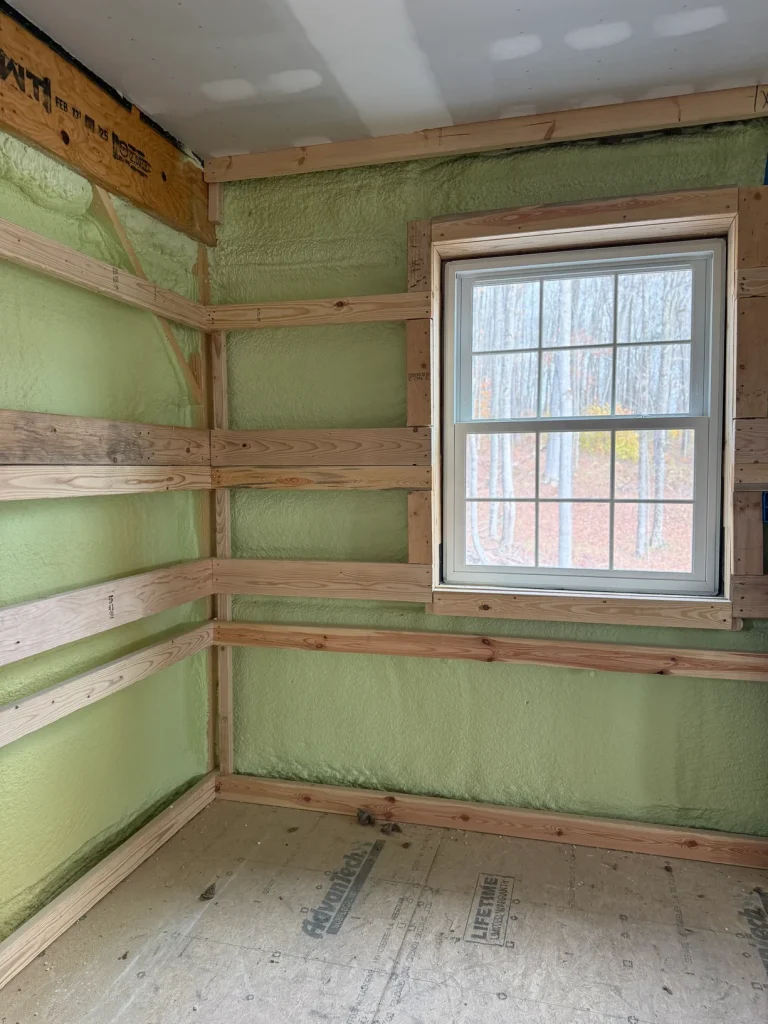
Retrofit insulation performance depends on material choice, installation quality, and how well air leaks and moisture are controlled. We evaluate each building individually to recommend the right combination of these factors.
Spray Foam Benefits For Homes And Commercial Properties
We use spray foam because it expands to fill gaps that other materials miss, including irregular cavities around wiring and plumbing. This creates a continuous barrier against air infiltration.
Closed-cell spray foam adds structural rigidity and resists water absorption, making it suitable for basements, crawl spaces, and metal buildings. Open-cell foam costs less and works well for interior walls and attics where moisture exposure is lower.
For commercial properties, we often combine spray foam with other insulation types to balance performance and budget across large square footage. Homeowners typically see the most benefit in attics, rim joists, and areas with known drafts.
Both foam types carry higher R-values per inch than fiberglass or cellulose, which matters when wall or roof cavity space is limited.
Air Sealing, Moisture Control, And Energy Efficiency
Insulation alone does not stop air movement through a building envelope. We pair insulation work with air sealing at penetrations, seams, and transitions where conditioned air escapes.
Moisture control matters just as much as thermal performance. Trapped moisture inside walls or attics can lead to mold growth or wood rot, even when insulation levels meet code requirements.
We assess vapor barriers, ventilation paths, and existing moisture sources before recommending a retrofit plan. This step prevents us from sealing in problems that existed before insulation was added.
Properly sealed and insulated buildings show measurable reductions in heating and cooling demand. Common indicators we look for during assessments include:
- Uneven room temperatures between floors or zones
- Visible drafts near outlets, windows, or baseboards
- Condensation on interior surfaces during cold months
- Higher-than-expected utility bills relative to building size
Why Choose Us?
Choosing the right team for your retrofit insulation can transform your home’s comfort, lower energy bills, and give you peace of mind. At Highbridge Spray Foam, we make the retrofit process simple, effective, and stress-free.
Top-Notch Energy Efficiency
Our retrofit insulation seals every gap, keeping heat in during winter and out in summer.
Quality Materials & Workmanship
We use top-grade spray foam insulation and proven techniques to ensure lasting results.
Fast and Hassle-Free Installation
We respect your time and space, completing retrofit projects quickly with minimal disruption.
Retrofit Insulation in Davenport, NY
Older or under-insulated homes in Davenport, NY can lose valuable heated or cooled air through walls, attics, and floors. This can result in drafts, uncomfortable rooms, and rising energy costs. Retrofit insulation offers a practical way to improve your home’s efficiency and comfort without extensive remodeling.
What Is Retrofit Insulation?
Retrofit insulation adds new insulation to existing areas of a home where coverage is limited or outdated. It helps slow heat transfer, reduce air movement, and maintain more consistent indoor temperatures. Depending on the property, insulation can be upgraded in attics, walls, floors, and other areas.
Why Retrofit Insulation Matters
A properly insulated home is easier to heat and cool throughout the year. Retrofit insulation can help reduce energy loss, improve indoor comfort, minimize drafts, and support better moisture control. With professional installation, an insulation upgrade can provide lasting benefits while improving the overall performance of your existing home.

Project Planning And Professional Installation
A retrofit project succeeds when the plan is built around the specific conditions of your building. We combine a detailed property assessment with a structured installation process to deliver lasting energy performance.
Property Assessment And Insulation Recommendations
We start every retrofit with a walkthrough of the property, checking attics, crawl spaces, basements, and wall cavities. This tells us where air leaks, moisture issues, or insufficient R-values are affecting comfort and energy use.
Based on what we find, we recommend a specific approach for each area of the home or building. Our recommendations typically include:
- Spray foam for air sealing and high R-value in tight or irregular spaces
- Blown-in insulation for existing walls and attics without major demolition
- Targeted upgrades in areas with the most significant heat loss
We explain our findings in plain terms and provide a clear scope of work before any installation begins.
Installation Process And Long-Term Value
Once the plan is set, our crews follow a consistent process: prep the work area, install the specified insulation material, and inspect the results before closing up the space. We work efficiently to limit disruption to your daily routine.
Materials and application methods are matched to each area’s requirements, whether that means spray foam in a rim joist or blown-in cellulose in a sidewall.
Properly installed insulation reduces energy loss and helps maintain consistent indoor temperatures year-round. For homeowners and business owners, this translates into lower utility costs and fewer strain points on heating and cooling systems over time.

We Proudly Serve Davenport
Upgrade Your Home With Retrofit Insulation
Is your home in Davenport, NY losing energy through outdated or inadequate insulation? Highbridge Spray Foam provides professional retrofit insulation solutions to improve energy efficiency, reduce drafts, and maintain comfortable indoor temperatures year-round.
Schedule your free inspection today or request a personalized quote!
TESTIMONIALS


 Trustindex verifies that the original source of the review is Google.
 Trustindex verifies that the original source of the review is Google.
 Trustindex verifies that the original source of the review is Google.
 Trustindex verifies that the original source of the review is Google.
 Trustindex verifies that the original source of the review is Google.
 Trustindex verifies that the original source of the review is Google.
 Trustindex verifies that the original source of the review is Google.
 Trustindex verifies that the original source of the review is Google.
FREQUENTLY ASKED QUESTIONS
Retrofit insulation raises common questions about cost, safety, installation, and long-term value. We answer the questions we hear most often from homeowners and property owners in Davenport, NY.
What are the benefits of retrofit insulation for an existing home or commercial building?
We install retrofit insulation to seal gaps and air leaks that older buildings often develop over time. This reduces drafts, evens out temperatures between rooms, and cuts down on the strain placed on heating and cooling systems.
For commercial buildings, retrofit insulation can also reduce moisture buildup in walls and roofs. We find this matters most in older structures where original insulation has settled or degraded.
How much does retrofit spray foam insulation cost for a typical property?
Cost depends on the size of the property, the type of foam used, and how much of the building needs treatment. We calculate pricing based on square footage, accessibility of the space, and whether open-cell or closed-cell foam fits the project best.
A small attic retrofit costs less than a whole-building commercial application. We provide a specific quote after assessing the property in person, since remote estimates rarely reflect the actual scope of work.
Can spray foam insulation be installed without major demolition?
In most cases, we can install spray foam insulation without tearing out walls or ceilings. We access attics, crawl spaces, and basement rim joists directly, which limits disruption to finished living or working areas.
Some projects do require opening a wall cavity if there’s no other access point. We assess this during the initial inspection and let property owners know what to expect before work begins.
Is spray foam insulation safe for homes and businesses?
Spray foam insulation is safe once fully cured, and we follow manufacturer guidelines during installation to manage curing time and ventilation. We recommend that occupants stay out of the treated area for the period specified by the product manufacturer, typically 24 hours.
We use proper protective equipment and ventilation during application. After curing, the material becomes inert and doesn’t emit the fumes present during the spraying and curing process.
Will adding insulation help reduce heating and cooling costs?
Yes, added insulation reduces the amount of conditioned air that escapes through walls, attics, and rim joists. We see this translate into lower energy bills for both residential and commercial properties, since HVAC systems don’t have to work as hard to maintain temperature.
The exact savings depend on the property’s current insulation levels and air leakage before the retrofit. Older buildings with minimal insulation tend to see a bigger difference than those with some insulation already in place.
Does spray foam insulation affect a property's resale value?
Spray foam insulation can support resale value by lowering a buyer’s expected energy costs and improving comfort. We find that documented insulation upgrades often serve as a selling point during home or property inspections.
It won’t replace other factors buyers consider, like location or overall condition. But it does address a common concern raised during inspections, especially in older homes and commercial buildings.