
If your home in Clay feels drafty in January and stuffy in July, the problem usually isn’t your furnace or air conditioner — it’s air leaking through gaps in your attic, walls, and rim joists. Central New York’s temperature swings put constant pressure on a building envelope, and older insulation often can’t keep up.
Highbridge Spray Foam installs spray foam, blown-in, and attic insulation for homes and commercial buildings in Clay, NY, creating an air-sealed thermal barrier that reduces energy loss, evens out room temperatures, and helps limit moisture and mold problems. We work on existing structures as well as new construction, and we match the insulation type to how each space is actually used.
Insulation Solutions for Homes and Commercial Properties

We install spray foam and blown-in insulation in houses, garages, barns, and commercial buildings across Clay and the surrounding Onondaga County area. The right product depends on the cavity, the moisture conditions, and whether the space is conditioned.
Spray Foam Insulation Applications
We work with both closed-cell and open-cell spray polyurethane foam, and each has a clear role.
Closed-cell foam is dense, adds structural rigidity, and acts as a vapor retarder at around 2 inches. We use it in crawl spaces, rim joists, metal buildings, and below-grade walls where moisture is a factor.
Open-cell foam expands further, fills irregular framing bays, and dampens sound. It is a common choice for interior walls, between floors, and in vented roof assemblies.
Typical applications include:
- New construction wall cavities and roof decks
- Pole barns, workshops, and steel-frame commercial buildings
- Rim joists and band boards, a frequent source of air leakage
- Retrofits where existing fiberglass has settled or been damaged
We also install blown-in cellulose and fiberglass when the budget or the assembly calls for it.
Attic, Wall, And Crawl Space Upgrades
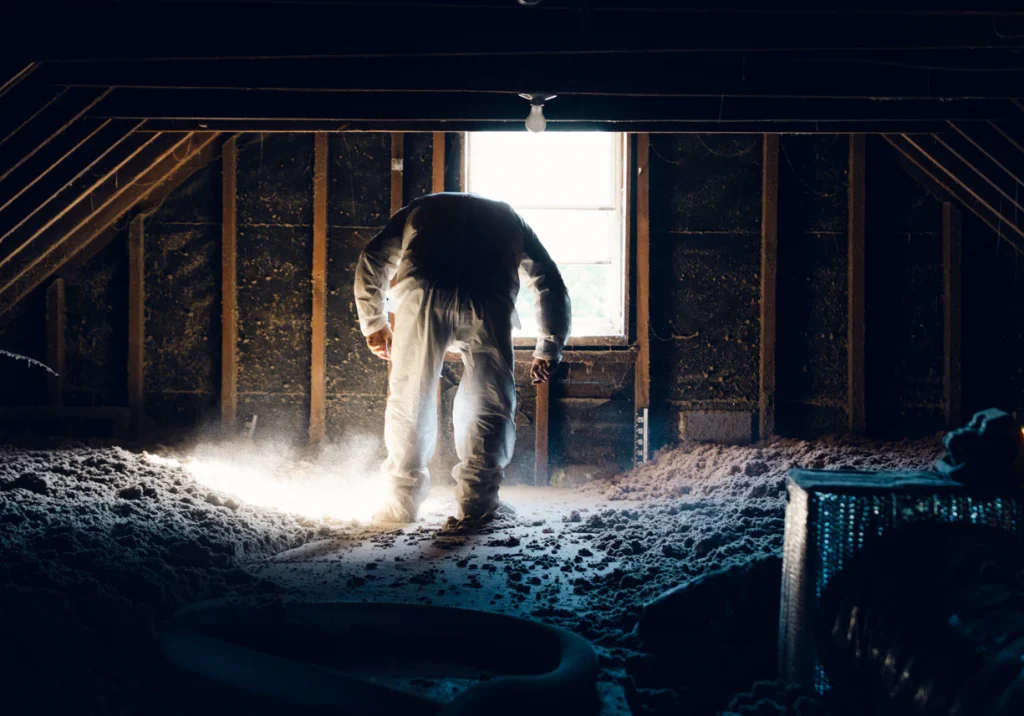
Attics are usually where we find the largest losses. Depending on the roof, we either air-seal and blow loose-fill over the flat ceiling or apply foam directly to the roof deck to bring the attic inside the thermal envelope.
For walls, blown-in insulation lets us fill existing cavities through small access holes rather than opening finished drywall.
| Area | Common Approach | What It Addresses |
|---|---|---|
| Attic | Air sealing plus blown-in or roof-deck foam | Heat loss, ice dams |
| Walls | Dense-pack blown-in or spray foam | Cold rooms, drafts |
| Crawl space | Closed-cell foam on walls and rim joist | Damp air, cold floors |
| Basement | Closed-cell on foundation walls | Condensation, heat loss |
In crawl spaces, we seal the perimeter rather than the subfloor so plumbing lines stay within the conditioned zone.
Why Choose Us?
Hiring the right insulation contractor can make all the difference in your home’s comfort, energy efficiency, and safety. At Highbridge Spray Foam, we make insulation simple, effective, and worry-free.
Customized Solutions for
Your Home
Every home is different. We inspect your property and recommend the insulation solution that fits your needs perfectly.
Experienced &
Professional Team
Our certified crew has years of experience installing all types of insulation. We handle every project carefully, cleanly, and safely.
Energy Savings &
Comfort
Proper insulation keeps your home warmer in winter, cooler in summer, and reduces drafts. You’ll enjoy more even temperatures and lower energy bills.
Make Your Home Comfortable with a Trusted Insulation Contractor
Every home in Clay, NY deserves comfort and lower energy bills. Yet poor or missing insulation can make rooms drafty, uneven, and costly. A trained insulation contractor can solve these problems quickly and effectively.
What Is an Insulation Contractor?
A professional insulation contractor installs insulation that keeps your home warm in winter and cool in summer. Proper insulation protects against moisture, mold, and pests. Unlike DIY or low-quality solutions, professional insulation is precise, durable, and long-lasting.
The Benefits of Hiring an Insulation Contractor

Proper insulation can save money on energy bills, improve comfort, prevent drafts, and protect your home’s structure. Experts make sure your insulation is installed correctly for maximum efficiency.
Why Highbridge Spray Foam Is the Right Choice
Our work centers on two outcomes homeowners and building owners in Clay care about: lower heating and cooling costs, and installations that hold up in Central New York’s climate.
Energy Efficiency And Indoor Comfort
Air leakage accounts for a significant share of wasted energy in most homes. Closed-cell spray foam seals gaps at rim joists, top plates, and around penetrations while adding R-value, which reduces the load on your furnace and air conditioner.
In Clay, that matters most from December through February, when temperatures regularly sit below freezing.
The comfort side is just as noticeable:
- Fewer drafts near floors, attic hatches, and knee walls
- More even temperatures between the first and second floors
- Reduced moisture movement into wall and roof assemblies, which helps limit mold growth
- Quieter rooms, since foam dampens sound transfer between spaces
Unlike batt insulation that can sag or settle over time, spray foam adheres to the substrate and keeps its shape and performance for the life of the assembly.
Professional Installation For Clay, NY Properties
Spray foam performance depends on how it is applied. Substrate temperature, mix ratio, and lift thickness all affect whether the foam cures properly and adheres correctly, which is why we handle preparation, ventilation, and cure time as carefully as the spray itself.
We work on a range of project types across the Clay area:
| Project Type | Common Applications |
|---|---|
| Existing homes | Attics, basements, rim joists, crawl spaces |
| New construction | Wall cavities, cathedral ceilings, garage ceilings |
| Commercial buildings | Metal buildings, warehouses, retail spaces |
| Outbuildings | Pole barns, workshops, detached garages |
Before we quote, we look at your existing insulation, ventilation setup, and where you are losing air. That assessment determines whether open-cell or closed-cell foam is the better fit, and how many inches the job actually requires.
We Proudly Serve Clay
Upgrade Your Home’s Comfort with a Trusted Insulation Contractor!
Save energy, reduce drafts, and protect your home with Highbridge Spray Foam, your local insulation contractor in Clay, NY. Schedule your free inspection or request a quote today!
TESTIMONIALS
Trustindex verifies that the original source of the review is Google. Bret and his crew at Highbridge Spray Foam did an outstanding job! And they were incredibly dependable and courteous! Were great counsel when making suggestions! Would absolutely recommend them!!Posted on GoogleTrustindex verifies that the original source of the review is Google. Cannot say enough about this wonderful company! They quickly returned my call. Arrived at the worksite within 48 hours of my initial contact! Gave us an estimate with 3 options clearly outlined what they would suggest. Made contact with town building codes quickly and professionally. Codes required higher R value on rooftop. Scheduled installation and they arrived as promised! Project was handled from the beginning to the end with complete professionalism! High recommend!!Posted on GoogleTrustindex verifies that the original source of the review is Google. They do the best work with the best product!!!!Posted on GoogleTrustindex verifies that the original source of the review is Google. I can’t thank Brett and his team enough for the great job they did insulating the basement on my new construction home! This small business is very professional, courteous, and their attention to detail is at the top of their trade. And not only is his work excellent, the cost is better than any other company! There has been an immediate improvement in temperature and humidity, not only in the basement, but throughout the whole house as well! I can’t express my satisfaction enough with Brett and any future project I have, Highbridge will be the first call I make.Posted on GoogleTrustindex verifies that the original source of the review is Google. Excellent crew and service! I am very pleased with their work and will be calling them again for my next project.Posted on GoogleTrustindex verifies that the original source of the review is Google. Brett from Highbridge came and gave me a quote to foam my breezeway floor. It is a narrow space between the floor and the ground. We agreed on a time to complete the work. He and his partner were right on time and got right to work. Brett crawled under the floor and removed all of the old insulation and began foaming the area we agreed on. He never complained that it was too tight to work in or that it was dirty. I would absolutely recommend Brett and Highbridge Spray Foam to do all of your insulation needs.Posted on GoogleTrustindex verifies that the original source of the review is Google. I had spray foam applied in a new addition today. I can already tell the difference in temperature and even sound in that area. Super happy with the communication, turnaround time, speed of application, and clean up. Thanks Highbridge Spray Foam!Posted on GoogleTrustindex verifies that the original source of the review is Google. brett and his crew are by far the best of the best! highbridge pays very close attention to every detail you mention and they deliver on it with precise workmanship. from the moment they arrive till the second they leave you feel like you are in good competent hands. i couldn’t be happier with the job they did. i will never go to anyone else. keep on keeping on highbridge! i will most definitely be a repeat customer!Verified by TrustindexTrustindex verified badge is the Universal Symbol of Trust. Only the greatest companies can get the verified badge who has a review score above 4.5, based on customer reviews over the past 12 months. Read more
FREQUENTLY ASKED QUESTIONS
Homeowners and building owners in Clay often ask about service options, project timelines, material differences, and what insulation work costs before scheduling an estimate. Below are direct answers to the questions we hear most often about spray foam, blown-in insulation, and retrofit work in Onondaga County.
What types of insulation services are available for homes and commercial properties?
We install open-cell and closed-cell spray foam, along with blown-in cellulose and fiberglass for attics and wall cavities.
Our work covers several project types:
- New construction — insulating open wall cavities, rim joists, and roof decks before drywall goes up
- Retrofit insulation — adding material to existing homes without full demolition
- Attic and crawl space insulation — addressing the two areas responsible for most heat loss in older Clay homes
- Commercial insulation — metal buildings, warehouses, pole barns, and office spaces
Blown-in insulation is often the practical choice when we’re improving an existing attic or filling closed wall cavities, since it doesn’t require opening up finished surfaces.
How do I know whether my property needs new or upgraded insulation?
A few signs point clearly to an insulation problem. Rooms that stay noticeably colder or warmer than the rest of the house, drafts near baseboards and outlets, and ice dams forming along roof edges in January all suggest air is moving where it shouldn’t.
Rising utility bills without a change in usage habits is another common indicator.
Age matters too. Homes built before the 1990s in Central New York frequently have attic insulation below current recommended levels, and settled or compressed material loses much of its original R-value.
We perform an on-site assessment that includes checking attic depth, inspecting the rim joist area, and identifying air leakage points. That gives us a factual basis for a recommendation rather than a guess.
What are the benefits of spray foam insulation compared with traditional insulation materials?
Spray foam applies as a liquid, then expands to fill gaps, cracks, and irregular cavities. That expansion creates an air seal — something batt insulation cannot do on its own, since fiberglass slows heat transfer but allows air to pass through.
Closed-cell foam offers a higher R-value per inch (roughly R-6 to R-7) than fiberglass batts (about R-3.1 to R-3.8 per inch). It also functions as a vapor retarder and adds rigidity to the assembly.
Open-cell foam costs less per board foot and works well in interior applications where moisture control isn’t a concern.
The trade-off is upfront cost. Spray foam is more expensive per square foot than fiberglass or cellulose, though it typically delivers better air sealing performance in the same space.
How much does professional insulation installation typically cost in Clay, NY?
Pricing depends on square footage, the type of foam, and the thickness required. Open-cell spray foam generally runs lower per board foot than closed-cell, which uses denser material and more product per inch of coverage.
Blown-in attic insulation is usually the least expensive option per square foot.
Other factors that affect the final number include attic accessibility, whether old material needs removal, and how much prep work the space requires. A crawl space with limited clearance takes longer than an open new-construction wall.
We provide free written estimates so you see the full scope and price before committing to anything.
Can insulation help reduce heating and cooling costs throughout the year?
Yes. Clay sees January highs near 29°F and July highs around 82°F, so both heating and cooling systems run hard during parts of the year.
Air sealing and adequate R-value reduce the load on that equipment. The U.S. Department of Energy estimates homeowners can save around 15% on heating and cooling costs by air sealing and adding insulation in attics, floors, and crawl spaces.
Actual savings vary based on your home’s current condition, HVAC efficiency, and how you use the space.
There’s also a comfort benefit that doesn’t appear on a utility bill — fewer drafts, more consistent room-to-room temperatures, and less noise transfer from outside.
How long does it take to install spray foam insulation in a home or business?
Most residential projects finish in one to two days. A standard attic or crawl space application often takes a single day, including setup and cleanup.
Larger jobs — full new-construction homes, whole-house retrofits, or commercial buildings — may run two to four days depending on square footage.
After application, spray foam cures quickly. We typically ask that the treated area stay unoccupied for 24 hours to allow proper ventilation, though the foam itself sets within minutes of being sprayed.
We give you a specific timeline during the estimate so you can plan around the work.