
Retrofit insulation adds or upgrades insulation in an existing home or building without the need for major demolition or reconstruction. For Syracuse homeowners dealing with drafty rooms, ice dams, or heating bills that climb every January, it is often the most direct way to fix the underlying problem.
Central New York puts real demands on a building envelope. Lake-effect snow, temperature swings between seasons, and summer humidity all expose gaps in walls, attics, rim joists, and crawl spaces — areas that were frequently under-insulated or left empty in homes built before modern energy codes.
At Highbridge Spray Foam, we work with property owners across Syracuse and the surrounding areas to identify where conditioned air is escaping and select the right material for each assembly, whether that means closed-cell spray foam, open-cell foam, or blown-in insulation.
Insulation Performance for Syracuse Properties
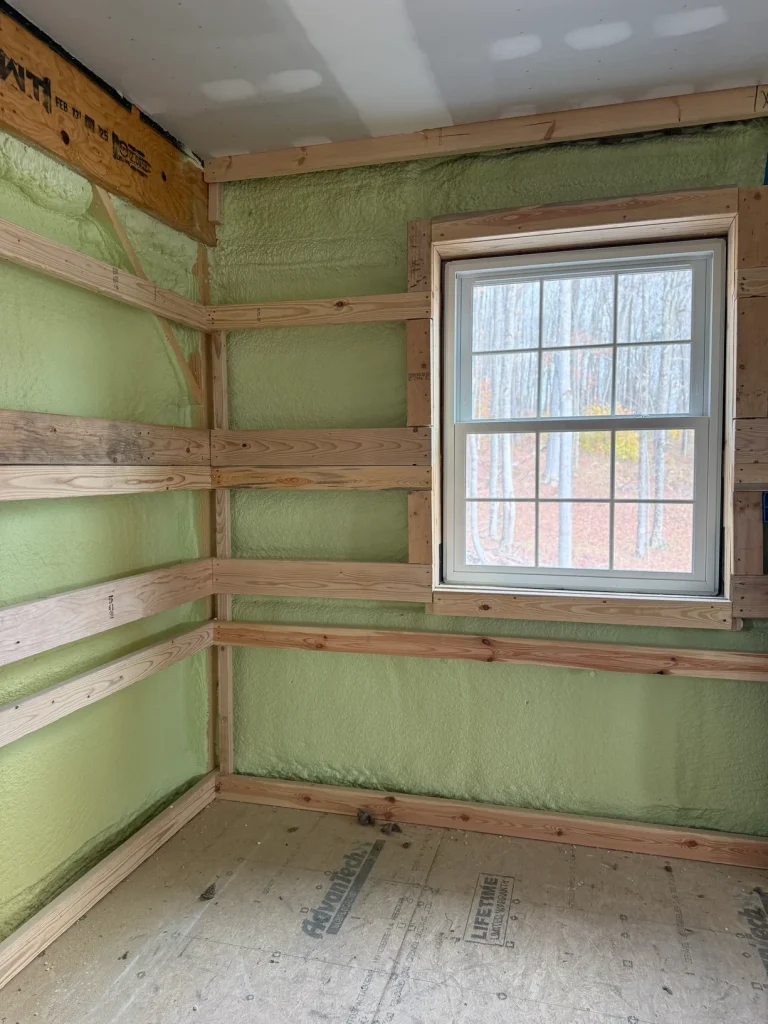
Retrofit insulation changes how a Central New York home handles heat loss in January and humidity in July. The two performance factors that matter most in this climate are thermal resistance combined with air tightness, and the ability to manage moisture inside wall and roof assemblies.
Energy Efficiency and Indoor Comfort
Syracuse averages roughly 6,700 heating degree days per year, so heat loss through under-insulated cavities drives a large share of annual fuel costs.
Closed-cell spray foam delivers about R-6.5 to R-7 per inch, while open-cell falls near R-3.7 per inch. That density difference matters in 2×4 walls and rim joists where cavity depth is limited.
| Area | Typical Retrofit Approach |
|---|---|
| Attic floor / roof deck | Spray foam at deck or blown-in over existing batts |
| Rim joists | 2–3 inches closed-cell |
| Enclosed walls | Injection or dense-pack through drilled ports |
| Crawl spaces | Closed-cell on walls and band joist |
Homeowners typically report fewer cold rooms above garages, reduced draft near baseboards, and shorter furnace cycles after the work is complete.
Moisture Control and Air Sealing
Air leakage carries moisture, and in our climate that moisture moves outward through walls in winter and inward during humid summer weeks.
Sealing the leak paths is the first step: top plates, chases, recessed light housings, attic hatches, and basement band joists. These points often account for a substantial portion of measured air leakage in older Syracuse homes.
Closed-cell foam functions as both insulation and a vapor retarder at roughly 1.5 to 2 inches of thickness, which limits condensation on cold sheathing.
We also verify that soffit and ridge ventilation, bath fans, and dryer ducts are configured correctly before insulating, since a sealed assembly with trapped moisture creates problems rather than solving them.
Why Choose Us?
Choosing the right team for your retrofit insulation can transform your home’s comfort, lower energy bills, and give you peace of mind. At Highbridge Spray Foam, we make the retrofit process simple, effective, and stress-free.
Top-Notch Energy Efficiency
Our retrofit insulation seals every gap, keeping heat in during winter and out in summer.
Quality Materials & Workmanship
We use top-grade spray foam insulation and proven techniques to ensure lasting results.
Fast and Hassle-Free Installation
We respect your time and space, completing retrofit projects quickly with minimal disruption.
Make Your Home Cozy and Efficient with Retrofit Insulation in Syracuse, NY
Every home in Syracuse, NY can feel cozy, quiet, and efficient. Without proper retrofit insulation, warm or cool air can escape, making your home less comfortable. This can cause drafts, uneven temperatures, and higher energy bills. You can enjoy a cozier home with lower bills and balanced temperatures.
What Is Retrofit Insulation?
Retrofit insulation fills gaps and improves energy efficiency in older homes. It keeps your home warm in winter and cool in summer. Proper insulation prevents moisture buildup, mold growth, and unwanted pests. Unlike old insulation, modern materials stay efficient and strong over time.
Why Retrofit Insulation Matters
It keeps your home cozy in winter, cool in summer, and lowers utility costs. It also helps protect your home’s structure and prevents pests.
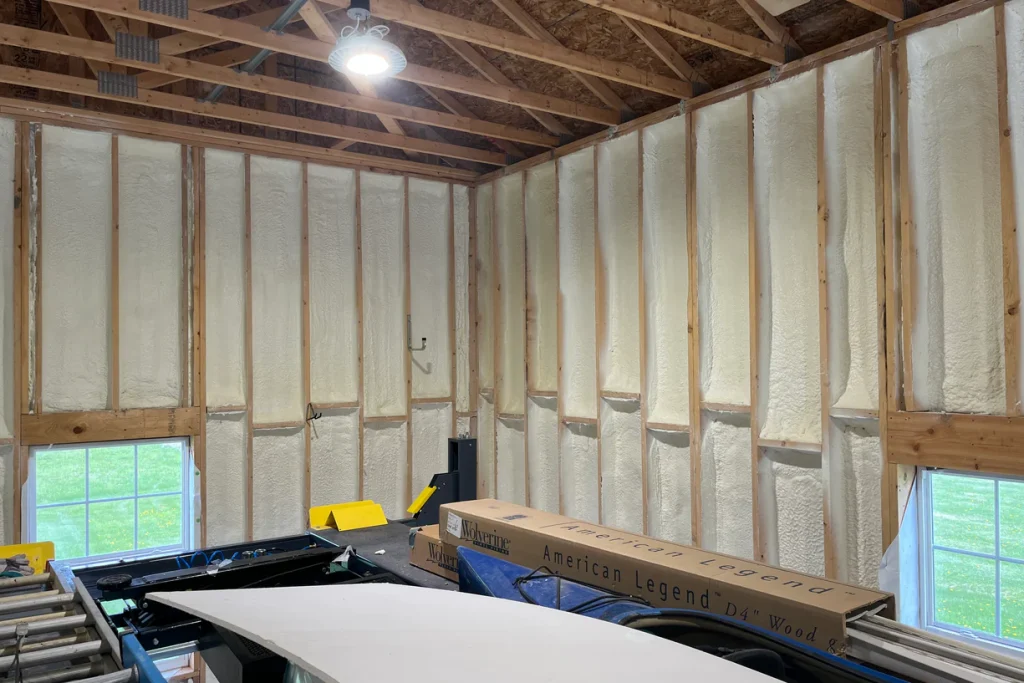
Professional Retrofit Planning and Installation
Every retrofit project we take on in Syracuse begins with measuring what is already in place, identifying where heat and air are moving, and matching the material to the assembly. From there, we build a scope that fits the building type, the occupancy schedule, and the budget.
Assessment of Existing Insulation
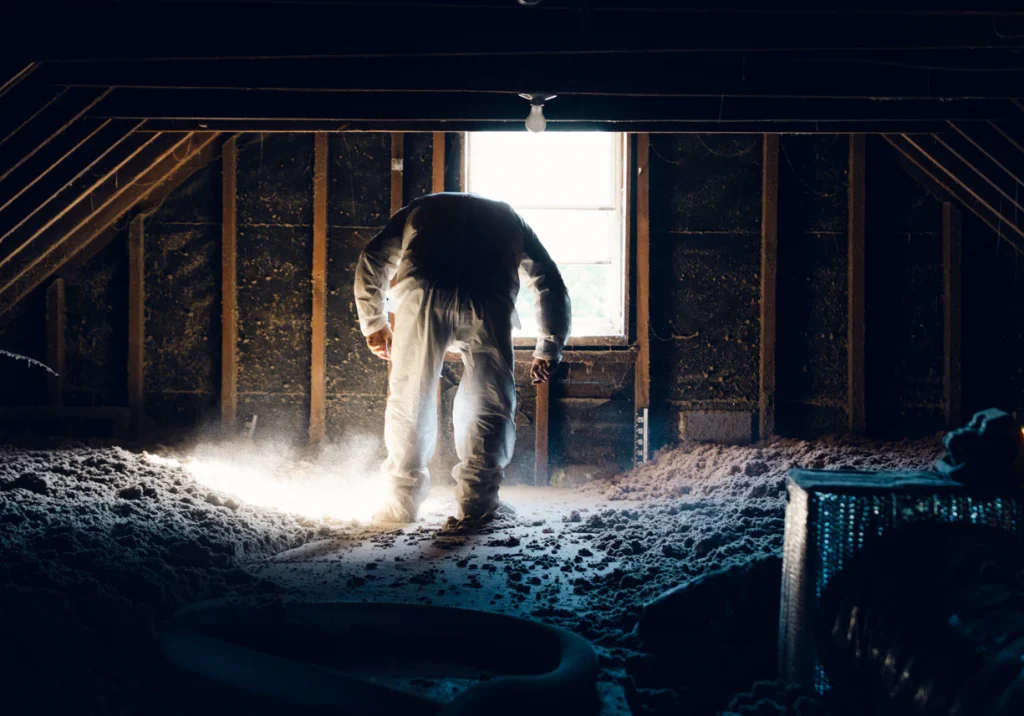
We start with a walkthrough of the attic, basement, rim joists, and any accessible wall cavities. Older Syracuse homes often have settled cellulose, compressed batts, or knob-and-tube wiring that changes how we approach a cavity.
Our assessment documents current R-values, moisture staining, ice dam history, and air leakage points such as top plates, chimney chases, and recessed lights.
What we look for:
- Depth and condition of attic insulation
- Ventilation at soffits and ridge
- Signs of condensation on sheathing or ductwork
- Gaps around plumbing stacks and electrical penetrations
- Basement and crawl space temperature differences
This information tells us whether the right move is dense-pack cellulose, closed-cell spray foam, open-cell foam, or a combination across different areas of the building.
Solutions for Homes and Commercial Buildings
Residential retrofits usually focus on the attic floor, rim joists, and exterior walls. For walls, we drill access holes and dense-pack the cavity, then patch and seal. Attics often get air sealing at the ceiling plane followed by added loose-fill or spray foam at the roof deck.
Commercial and agricultural work in Central New York calls for different assemblies. Metal buildings, pole barns, and warehouses benefit from closed-cell foam applied directly to steel or masonry, which handles the condensation problems those structures tend to have.
| Building Type | Typical Retrofit Approach |
|---|---|
| 1900s–1950s wood frame home | Dense-pack walls, attic air sealing, rim joist foam |
| Ranch or split-level | Attic top-up, basement band joist, duct sealing |
| Metal building or pole barn | Closed-cell foam on roof deck and walls |
| Commercial flat roof | Foam at parapet, mechanical room separation |
Project Scheduling and Long-Term Value
Most single-family attic and rim joist retrofits are completed in one to two days. Whole-house wall retrofits take longer, and we coordinate around your schedule to limit disruption.
We provide a written scope before work begins so you know which areas are being treated, what materials are used, and the target R-value for each assembly.
Retrofit insulation reduces heating loads through Syracuse winters and lowers cooling demand in summer. It also improves temperature consistency between floors and can reduce ice dam formation when paired with proper air sealing and ventilation.
We Proudly Serve Syracuse
Upgrade Your home in Syracuse, NY for Comfort & Savings!
Keep your older home comfortable, quiet, and energy-efficient with Highbridge Spray Foam Retrofit Insulation. Schedule your free inspection or request a quote today!
TESTIMONIALS
Trustindex verifies that the original source of the review is Google. Bret and his crew at Highbridge Spray Foam did an outstanding job! And they were incredibly dependable and courteous! Were great counsel when making suggestions! Would absolutely recommend them!!Posted on GoogleTrustindex verifies that the original source of the review is Google. Cannot say enough about this wonderful company! They quickly returned my call. Arrived at the worksite within 48 hours of my initial contact! Gave us an estimate with 3 options clearly outlined what they would suggest. Made contact with town building codes quickly and professionally. Codes required higher R value on rooftop. Scheduled installation and they arrived as promised! Project was handled from the beginning to the end with complete professionalism! High recommend!!Posted on GoogleTrustindex verifies that the original source of the review is Google. They do the best work with the best product!!!!Posted on GoogleTrustindex verifies that the original source of the review is Google. I can’t thank Brett and his team enough for the great job they did insulating the basement on my new construction home! This small business is very professional, courteous, and their attention to detail is at the top of their trade. And not only is his work excellent, the cost is better than any other company! There has been an immediate improvement in temperature and humidity, not only in the basement, but throughout the whole house as well! I can’t express my satisfaction enough with Brett and any future project I have, Highbridge will be the first call I make.Posted on GoogleTrustindex verifies that the original source of the review is Google. Excellent crew and service! I am very pleased with their work and will be calling them again for my next project.Posted on GoogleTrustindex verifies that the original source of the review is Google. Brett from Highbridge came and gave me a quote to foam my breezeway floor. It is a narrow space between the floor and the ground. We agreed on a time to complete the work. He and his partner were right on time and got right to work. Brett crawled under the floor and removed all of the old insulation and began foaming the area we agreed on. He never complained that it was too tight to work in or that it was dirty. I would absolutely recommend Brett and Highbridge Spray Foam to do all of your insulation needs.Posted on GoogleTrustindex verifies that the original source of the review is Google. I had spray foam applied in a new addition today. I can already tell the difference in temperature and even sound in that area. Super happy with the communication, turnaround time, speed of application, and clean up. Thanks Highbridge Spray Foam!Posted on GoogleTrustindex verifies that the original source of the review is Google. brett and his crew are by far the best of the best! highbridge pays very close attention to every detail you mention and they deliver on it with precise workmanship. from the moment they arrive till the second they leave you feel like you are in good competent hands. i couldn’t be happier with the job they did. i will never go to anyone else. keep on keeping on highbridge! i will most definitely be a repeat customer!Verified by TrustindexTrustindex verified badge is the Universal Symbol of Trust. Only the greatest companies can get the verified badge who has a review score above 4.5, based on customer reviews over the past 12 months. Read more
FREQUENTLY ASKED QUESTIONS
Retrofit insulation decisions usually come down to which material fits each area of the building, how much demolition is required, and what the project will cost. Below are the questions Syracuse homeowners and property owners ask us most often before scheduling work.
How can retrofit insulation improve comfort and energy efficiency in an existing Syracuse property?
Most older homes in Central New York were built with little or no wall insulation, and attic levels that fall well short of current recommendations. That means heat escapes through the top of the house in January and humid air pushes in through the same gaps in July.
Adding insulation and air sealing addresses both problems at once. Homeowners typically notice fewer drafts near exterior walls, more even temperatures between the first and second floors, and less cycling from the furnace.
Heating and cooling account for a large share of household energy use, so reducing that load has a direct effect on monthly bills. The exact savings depend on the existing conditions, fuel type, and how the building is used.
What types of insulation are best suited for walls, attics, basements, and crawl spaces during a retrofit?
Each area has different access, moisture, and code considerations. Here is how we generally approach them:
- Closed walls: Dense-packed cellulose or injection foam installed through small access holes, since the cavities are already covered.
- Attics: Blown-in cellulose or fiberglass over the attic floor, or closed-cell spray foam at the roof deck when the attic contains ductwork or is being converted to living space.
- Basements: Closed-cell spray foam or rigid foam board on the rim joist and foundation walls, both of which tolerate contact with concrete and resist moisture.
- Crawl spaces: Closed-cell spray foam on the walls and rim joist, paired with a vapor barrier on the ground in unconditioned crawl spaces.
We inspect the space before recommending a material. Venting, existing moisture problems, and knob-and-tube wiring all influence what can safely be installed.
Can insulation be added to an existing home or commercial building without removing all of the drywall?
Yes, in most cases. Dense-pack and injection foam methods are designed for closed cavities and require only small openings, typically drilled from the interior or from the exterior siding.
Those openings are plugged and patched when the work is finished. Attics, basements, and crawl spaces usually need no cutting at all, since the framing is already exposed.
Full drywall removal is generally only necessary when a wall is being gutted anyway for wiring, plumbing, or water damage repair.
How does spray foam insulation help reduce drafts, moisture issues, and air leaks?
Spray foam expands after application and bonds to the surrounding surfaces, sealing the small gaps that fibrous insulation cannot block on its own. That addresses the air movement responsible for many drafts.
Closed-cell foam also functions as a vapor retarder at sufficient thickness. On rim joists and foundation walls, that helps keep warm interior air from condensing on cold surfaces, which is a common source of mold and wood rot in Syracuse basements.
Sealing air pathways has a secondary benefit: fewer entry points for insects and rodents that use wall and rim joist gaps.
What factors affect the cost of a retrofit insulation project in Syracuse, NY?
Pricing varies by project, but the main variables are consistent:
- Square footage and cavity depth of the areas being insulated
- Material selected — blown-in cellulose costs less per square foot than closed-cell spray foam
- Access difficulty, including low-clearance crawl spaces, steep roof pitches, and second-story exterior walls
- Removal of existing insulation if it is wet, contaminated, or compacted
- Air sealing and prep work, such as baffles, dam construction around recessed lights, or vapor barrier installation
- Repairs discovered during inspection, like roof leaks or venting corrections
We provide free estimates so you can compare options side by side. Utility incentives and state programs are sometimes available for insulation and air sealing, and we can point you toward the current ones.
How long does a professional retrofit insulation installation typically take?
An attic-only insulation job on an average home is often completed in a single day. Rim joist and crawl space work follows a similar timeline.
Dense-packing exterior walls takes longer, generally one to three days depending on the size of the house and the number of cavities. Projects that combine several areas, or require insulation removal first, may run longer.
Spray foam needs a brief curing period, and we will tell you how long to stay out of the treated area before returning. We confirm the schedule before work begins so you know what to expect each day.